




Falling for the Prince at Dark Arts Academy Season 2: Bound Before They Met
Romance DramaBox
 2026-11-10
 15
Falling for the Prince at Dark Arts Academy Season 2: Bound Before They Met
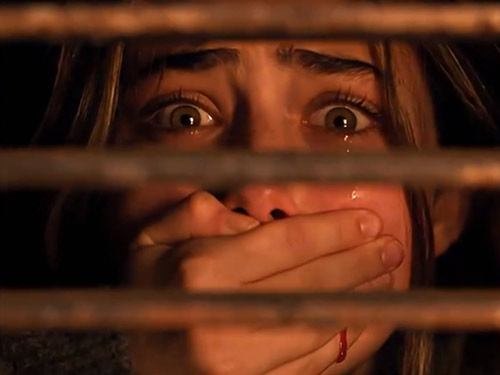
There is a particular kind of dread that only fantasy romance can produce. It is not the monster stepping out of the dark. It is watching a girl walk into a hall full of the creatures who slaughtered her parents, chin up, because she has decided the only way forward is straight through them.
That is the first thing Falling for the Prince at Dark Arts Academy Season 2 gives you, and it refuses to soften it. Margo Santiago is not a chosen one waiting to be rescued. She is a girl with a grudge and a plan, and the plan falls apart the moment she meets Prince Damien Dalca — charming, dangerous, and, for reasons she cannot yet name, entirely unsurprised to see her.
The show earns that opening because it takes its own mythology seriously: demons have hierarchies, and angel blood is a liability rather than a superpower. The romance runs on information asymmetry instead of coincidence, which is rare in short-form drama and the reason this is worth an evening on DramaBox.

Open DramaBox to watch for free
The Setup: She Enrolls at the School That Killed Her Family
The premise is brutally simple. Demons slaughter Margo's parents before the story properly begins. The academy she then enters — Edenfall, an elite institution with impeccable architecture and no interest in who it admits — is run by the very creatures she hates. Her education is also an infiltration: spellwork by morning, cataloguing exits by night.
This is where the forbidden romance stops being decorative and starts doing real work. Damien is the school's prince in the literal sense — status, agenda, and a habit of appearing precisely where Margo wants to be alone. She reads him as a threat, which he is. What she cannot read is the bond he placed on her the night her parents died, a secret binding that ties them together whether she consents or not.
The show frames that as horror wearing romance's clothes, and the disguise is convincing enough that you keep forgetting to be afraid. The other thread is the angel blood inside her, never framed as a gift: every time it surfaces, someone with power notices, and her own body becomes a political problem. By the midpoint the question is not whether these two end up together. It is whether the kingdom survives them being near each other.
Open DramaBox to watch for free
What Works: Four Things This Season Gets Right
1. The bond is a mechanism, not a shortcut.
Plenty of dark romances use a magical bond to skip the work of building chemistry. This one does the opposite: the bond is why neither character can trust their own feelings, which makes every tender moment suspect. Margo's affection might be hers, or it might be the binding talking. The show never lets either of you settle it.
2. Information asymmetry drives every scene.
Damien knows what happened the night of the massacre. Margo does not. That gap generates more tension than any amount of shouting, because you are watching two people hold the same conversation from different scripts.
3. The demon politics are legible.
World-building in short-form drama is usually a coat of paint. Here the power structure actually constrains what characters can do, so the villains have reasons and the heroes have limits.
4. The slow burn is slow for real.
Forbidden desire is only interesting while it stays forbidden. The show withholds, doubles back, and lets proximity work instead of rushing a kiss that would collapse it.
The cumulative effect is a romance that reads as genuinely dark rather than dark-adjacent: desire with a real cost, a power imbalance it refuses to romanticise, and two leads who negotiate with the lights off.

Open DramaBox to watch for free
Behind the Lens: Why It Looks Like That
The production's visual argument is simple and effective. The academy is shot warm; anything to do with demons is shot cold. Corridors glow amber, and the flashbacks to the massacre are nearly drained of colour. When the two palettes finally meet in one candlelit room where somebody is lying, you already know which side you are on.
For a short-form production — the kind DramaBox turns out at volume — the look is unusually controlled. Magic is suggested rather than sprayed across the frame: a hand held too still, a reflection that arrives a second late. The cheaper choice reads as the more confident one.
Margo Santiago: A Heroine Who Refuses to Be Rescued
Margo's defining trait is not power. It is refusal. She refuses to be grateful for protection she did not ask for, refuses to let grief make her docile, and refuses — most dangerously — to be told what she is. Her arc runs from wanting revenge to wanting to understand, which is a harder place to land.
What sells it is restraint. Where a lesser production would hand her a monologue, she goes quiet and watches, and you can see her filing information away. That stillness makes her dangerous, and it makes her legible to Damien, who recognises the calculation because he runs on the same fuel.
Damien Dalca: The Villain Who Thinks He Is the Protagonist
Damien is the best kind of antagonist: one with coherent internal logic. He bound Margo on the worst night of her life and has treated that as protection ever since. In his version he saved her. In hers he took something without asking, and the writing is disciplined enough not to referee.
The seduction works because it is patient. He never demands; he positions himself where help is useful and lets her come to him. By the time she does, you are no longer certain she chose it. That uncertainty is the point.

Open DramaBox to watch for free
Where It Stumbles
Two things keep this from being a clean win.
The first is the back half's pacing. Once the central secret moves toward the surface, revelations stack faster than they are earned, and a couple of turns land as plot mechanics rather than character decisions. Tension built carefully in the first stretch gets spent in a hurry.
The second is a supporting cast thinner than the world deserves. Edenfall is furnished with interesting faces — the rival student, the instructor with a hidden allegiance — who never get room to be more than furniture. If you want a fantasy where every side character carries weight, this reads as a sketch rather than a painting.
Neither is fatal, and some of it is the format: four minutes an episode cannot afford a subplot about an instructor's debts. What the show has instead is a lead pairing strong enough to carry the gaps, and an idea — that being loved by the person who wronged you is its own kind of haunting — that stays with you.
Final Verdict: Bound, and That Is the Problem
Falling for the Prince at Dark Arts Academy Season 2 is not a comfort watch. It is a romance built on a debt neither lead agreed to, and it cares far more about the discomfort of that than about handing you a clean resolution. That is why it works: it treats forbidden desire as a structural problem, not a mood.
All fifty episodes are on DramaBox, and the first three will tell you quickly whether you are the audience. If you want a dark fantasy romance with real bite, a heroine who keeps her own counsel and a prince who is genuinely unsettling rather than merely brooding, start there.
Before you go looking: Season 2 of Falling for the Prince at Dark Arts Academy has not been released. As of this writing, DramaBox has confirmed neither a renewal nor an air date, and there is no official trailer, episode count, or cast announcement to point to, so any date you see in fan threads is a guess rather than news. That silence is worth reading correctly. Sequels in this genre usually arrive fast and loud; this one has stayed quiet, which feels less like a door closing than like a production team taking its time with a story that already worked once. So the sensible move is to wait, keep an eye on DramaBox's official channels, and let the first season settle in the meantime. If the second one brings back even half the tension that made the first so easy to binge, the patience will have paid for itself.
One question before you go. If someone had bound you before you ever met them, would that be devotion or a crime? Margo has to answer it. So, in a way, does the audience.